From the journal · November 3, 2026
Exploring Performance Downpipes for the BMW M5, Mercedes-AMG GLE 63 S, and BMW M3 G80
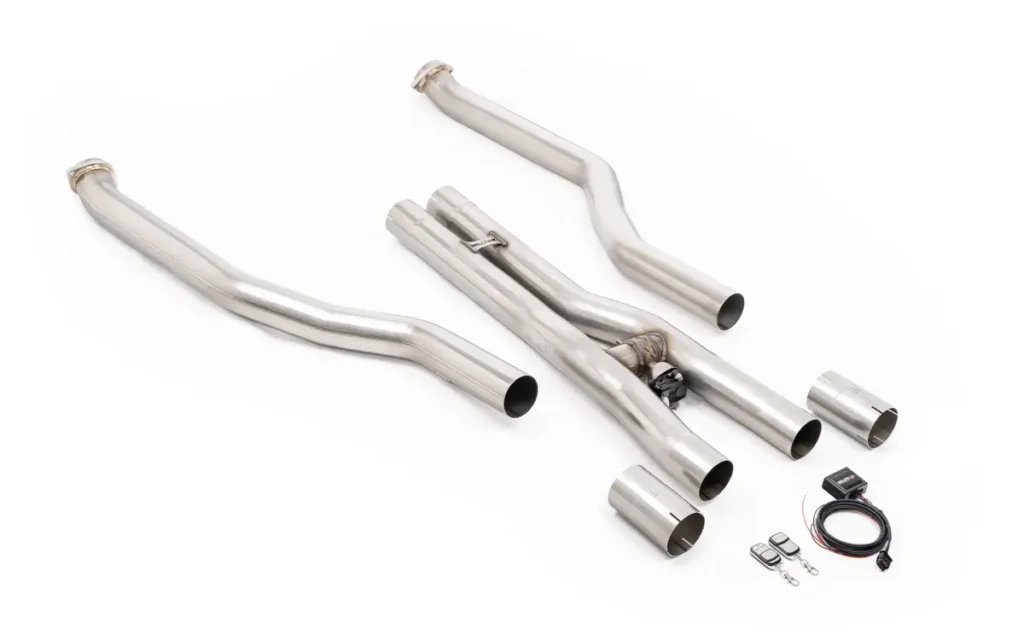
A performance car is about more than its power figures. The way an engine responds, the sound it produces, and the feeling behind the wheel all contribute to the experience. For many enthusiasts, the factory exhaust system is already impressive, but there’s always curiosity about what a carefully selected upgrade might bring.
Downpipes are often part of that conversation, particularly on turbocharged BMW M and Mercedes-AMG models. They influence the route exhaust gases take after leaving the turbocharger, and their design can affect sound and exhaust flow. Still, choosing the right components requires more than finding a product with an attractive photograph. Compatibility, build quality, emissions requirements, and installation all deserve proper attention.
Understanding the Purpose of Downpipes
A downpipe connects the turbocharger outlet to the rest of the exhaust system. It carries hot exhaust gases away from the turbocharger and towards the remaining exhaust components. Its dimensions, bends, material, and internal design can influence how efficiently gases move through the system.
Factory downpipes are engineered to balance several priorities: performance, emissions compliance, noise control, durability, and everyday comfort. Aftermarket designs may use different pipe diameters, construction methods, or catalytic converter arrangements.
The effect of an upgrade depends on the complete vehicle setup. Engine calibration, turbocharger characteristics, the rest of the exhaust system, and supporting modifications all play a role. Simply fitting a larger pipe doesn’t guarantee a particular horsepower increase. In fact, a poorly matched component can introduce problems rather than improve the driving experience.
BMW M5 G90 and G99: Understanding Secondary Downpipes
The latest BMW M5 platform brings a distinctive combination of high performance and modern technology. The G90 sedan and G99 Touring offer different body styles, but both demand careful consideration when selecting exhaust components. Their advanced powertrain and electronic systems make accurate fitment especially important.
When researching bmw m5 g90 g99 secondary downpipes , first establish exactly what the product is designed to do. The term “secondary downpipes” can refer to a particular section or configuration of the exhaust assembly, so buyers should ask the supplier for a diagram or detailed explanation rather than relying on the product name alone.
Check the application against the exact model year, engine configuration, and market specification. Confirm connection points, pipe dimensions, sensor locations, and whether the product is intended to work with the original exhaust system or other aftermarket parts.
Material and construction matter too. Stainless steel is commonly used in performance exhaust components because it offers strength and useful resistance to heat and corrosion. However, the quality of the welding, flanges, bends, and mounting points is just as important as the material itself.
Owners should also think about comfort. A performance upgrade should complement the M5’s character, not make every motorway journey tiring. An exhaust note that sounds exciting under acceleration but remains manageable during normal driving can be a more satisfying choice than sheer volume.
Mercedes-AMG GLE 63 S: Choosing the Right Exhaust Configuration
The Mercedes-AMG GLE 63 S combines SUV practicality with the character of a high-performance AMG. It has the size and comfort expected from a luxury vehicle, yet its engine and chassis deliver a very different experience from an ordinary family SUV.
For owners considering a downpipe mercedes gle63s amg , the first step is confirming the exact vehicle application. Model year, engine version, regional specification, and existing exhaust components can all affect compatibility. Even closely related AMG models may have different connection points or mounting requirements.
Think about the purpose of the upgrade. Some owners want a deeper exhaust tone, while others are interested in a broader performance package. These goals aren’t necessarily achieved by the same component. Ask the manufacturer about pipe diameter, material grade, catalytic converter configuration, and compatibility with the rest of the system.
Heat management is particularly relevant in a tightly packaged engine bay. Downpipes operate at high temperatures, so proper clearance from surrounding components and suitable heat protection are essential. An experienced installer should check these details before the vehicle is returned to regular use.
It’s also worth remembering that a louder GLE 63 S isn’t automatically a better one. If the vehicle is used for commuting, family trips, or long-distance driving, excessive cabin drone can become frustrating. Choose a setup that suits real-world use.
BMW M3 G80: Performance Upgrades with Precision
The BMW M3 G80 has a strong following because it combines everyday usability with serious performance potential. It can handle regular driving while still offering the response and character enthusiasts expect from an M car.
Interest in bmw m3 g80 downpipes often comes from owners looking to change exhaust sound or explore a more performance-focused configuration. Before buying, confirm that the component is specifically designed for the G80 and the relevant engine and model year. Don’t assume that a part intended for another BMW M model will fit just because the vehicles share design features.
Review the manufacturer’s fitment information carefully. Important details include flange shape, sensor placement, connection dimensions, supplied hardware, and compatibility with the existing exhaust. If the product description is vague, ask for clarification before placing an order.
Sound preference is personal. Some drivers enjoy a sharper, more aggressive note, while others prefer a controlled tone that doesn’t dominate the cabin. The final result depends on the downpipes and the other exhaust components working together. Looking at the entire system is more useful than judging one part in isolation.
Catted and Catless Designs: What Buyers Should Know
One of the most important decisions when comparing performance downpipes is the catalytic converter arrangement.
Catted downpipes retain catalytic converter elements, although aftermarket designs may differ from the factory specification. Catless downpipes remove those elements from the modified section. The difference affects emissions performance and can influence whether the vehicle is permitted on public roads.
Catalytic converters help reduce harmful exhaust pollutants. Removing required emissions equipment may result in inspection failure, diagnostic warnings, and legal problems. An aftermarket catted product isn’t automatically compliant either; buyers should check its certification and whether it meets the rules in their location.
Catless configurations are generally intended for motorsport or off-road applications where their use is permitted. Before choosing either option, understand the vehicle’s intended use and applicable regulations. A modification that sounds impressive but makes the car unsuitable for road use may not be a sensible investment.
Build Quality and Installation: Details Worth Checking
A downpipe experiences high temperatures, vibration, and repeated heating and cooling cycles. It needs to be manufactured to handle those conditions over time.
Look for clear information about material grade, pipe thickness, weld consistency, flange accuracy, and mounting design. Ask whether the package includes gaskets, clamps, and necessary hardware. Good documentation is a useful sign that the supplier understands the product.
Installation should be carried out by a workshop familiar with the relevant BMW or Mercedes-AMG platform. Technicians should inspect sensor connections, exhaust alignment, fasteners, heat shielding, and possible leaks. After installation, the system should be checked for unusual vibration, warning messages, and exhaust noise.
Modern vehicles also use sophisticated engine management and emissions-monitoring systems. Exhaust changes may affect sensor readings or diagnostic behaviour, and some setups may require specialist assessment. Any calibration work should prioritise engine safety and must not be used to conceal emissions faults or disable legally required monitoring.
Making a Confident Buying Decision
Before ordering, confirm the exact vehicle, model year, engine, and regional specification. Compare technical details rather than relying on marketing claims. Check warranty terms, installation requirements, and the supplier’s ability to answer fitment questions.
Most importantly, consider how the car is driven. A weekend performance vehicle may have different priorities from a daily-driven M5, GLE 63 S, or M3. Sound, comfort, reliability, emissions compliance, and long-term ownership costs should all be part of the decision.
The Right Upgrade Is the One That Suits the Car
Downpipes can be an interesting part of a wider performance project, but they shouldn’t be selected in isolation. The BMW M5 G90 / G99, Mercedes-AMG GLE 63 S, and BMW M3 G80 each have specific engineering requirements. A product that works well on one platform may not be suitable for another.
Take time to verify compatibility, choose quality components, and use an experienced installer. When the technical details and the owner’s expectations line up, an exhaust modification is much more likely to deliver a satisfying result without unnecessary compromises.