From the journal · November 26, 2026
From Cloudy Water to Rusty Stains: A Practical Guide to Improving Your Home’s Well Water

You turn on the kitchen faucet, fill a glass, and notice that the water looks slightly cloudy. Later, while cleaning the bathroom, you discover orange stains around the sink that weren’t there last week. These little surprises can be frustrating, especially when you depend on a private well for your entire household’s water supply.
Investing in appropriate well water filtration and softening can help address several groundwater quality concerns while making everyday household maintenance considerably easier.
Related reading: Keeping Well Water Safe at Home: How UV Treatment Helps Protect Your Family’s Water Supply · Simple Ways to Enjoy Cleaner, Better-Tasting Drinking Water at Home
For homeowners throughout Virginia and Maryland, understanding what’s happening beneath the ground is an important first step toward better water. Not every problem requires expensive equipment, but finding the right solution does require knowing what you’re dealing with.
Why Well Water Contains Different Minerals and Impurities
Groundwater travels through layers of soil, sand, and rock before reaching your well. During this journey, it naturally collects minerals and other substances that influence its characteristics.
Calcium and magnesium contribute to water hardness, while iron and manganese can cause discoloration and staining. Fine particles may also enter the water supply under certain conditions.
Unlike municipal water, private well water generally doesn’t pass through a centralized treatment facility before reaching your home.
This means homeowners need to take responsibility for monitoring water quality and arranging appropriate treatment.
Even neighboring properties can have noticeably different groundwater conditions. That’s why copying someone else’s treatment setup without testing your own water isn’t necessarily a good idea.
Getting to the Bottom of Those Stubborn Orange Stains
Few things are more annoying than discovering reddish marks on freshly washed white towels or noticing discoloration around a recently cleaned bathtub.
Problems involving iron & rust staining often develop when dissolved iron comes into contact with oxygen, creating reddish-brown particles that settle on household surfaces.
Iron can also contribute to a metallic taste or deposits within certain plumbing components.
Ordinary cleaning products may remove existing stains, but they’ll eventually return if the incoming water continues carrying excessive iron.
Specialized iron reduction systems can help address this problem. Depending on water chemistry, treatment may involve oxidation followed by filtration.
Choosing suitable equipment requires understanding the type of iron present, its concentration, and other relevant water characteristics.
Understanding Why Your Well Water Looks Cloudy
Clear water isn’t something every well owner can take for granted. Sometimes, tiny suspended particles make water appear hazy or visibly dirty.
Concerns involving sediment & cloudiness may result from fine sand, disturbed deposits, well construction issues, or other changes affecting the groundwater supply.
Occasionally, cloudiness is simply caused by tiny air bubbles. If a glass of water clears from the bottom upward after standing briefly, trapped air could be responsible.
Persistent cloudiness, however, deserves investigation.
Appropriate sediment filtration can help capture suspended particles before they travel through connected household plumbing.
If substantial amounts of sediment appear suddenly, arranging a professional well inspection may be necessary. Installing another filter won’t necessarily resolve an underlying mechanical or structural problem.
How Water Softening Can Reduce Household Maintenance
Hard water creates a different set of challenges from iron staining or suspended sediment.
Dissolved calcium and magnesium can leave chalky deposits around bathroom fixtures, inside kettles, and within water-using appliances.
These minerals also interfere with soap performance, which explains why you might find yourself using extra detergent without achieving particularly satisfying results.
Traditional ion exchange softeners reduce hardness by replacing calcium and magnesium ions with sodium or potassium ions.
Appropriate softening can help limit new scale deposits and improve soap performance.
However, a conventional softener isn’t designed to address every groundwater contaminant. Separate filtration or disinfection equipment may be necessary depending on your water quality.
Building a Treatment System That Works Together
Many private wells present more than one water quality concern. Your household might experience excessive hardness alongside elevated iron levels and suspended particles.
In these situations, combining complementary treatment technologies can make sense.
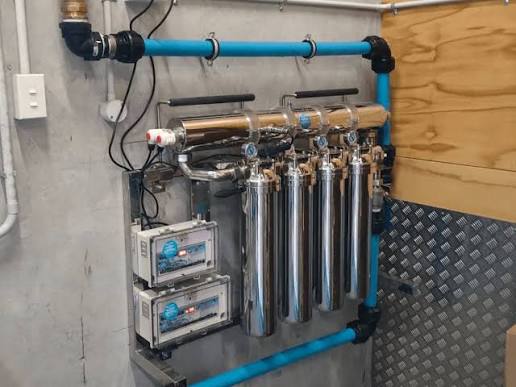
A sediment filter may capture physical debris, specialized media can address certain forms of iron, and a softener can reduce dissolved hardness minerals.
Additional treatment may be necessary when laboratory testing identifies microbial contamination or specific chemical concerns.
The arrangement and order of treatment components matter, too. Excessive iron, for example, can interfere with softener performance if it isn’t appropriately managed.
A thoughtfully designed system should address each identified concern while accommodating your household’s water consumption and plumbing requirements.
Why Regular Testing and Maintenance Are Essential
Having treatment equipment installed doesn’t mean your water supply no longer requires attention.
Groundwater conditions can change following heavy rainfall, flooding, or well repairs. Filtration media gradually lose effectiveness, sediment cartridges accumulate debris, and traditional softeners require periodic salt replenishment.
Following recommended servicing schedules helps preserve equipment performance.
Arrange appropriate laboratory testing to identify microbial contamination, nitrates, and other relevant substances. Periodic testing can also help evaluate treatment effectiveness.
Keep a record of previous results and maintenance dates. It doesn’t need to be complicated — even a simple notebook can prove useful.
Remember that clearer water and fewer stains don’t automatically establish drinking water safety.
Enjoying Your Well Water Without Constant Frustration
Owning a private well shouldn’t mean accepting discolored laundry, cloudy water, or endless bathroom cleaning as unavoidable parts of everyday life.
Begin with reliable testing, investigate underlying well problems, and select treatment equipment that addresses your property’s specific conditions.
A properly designed and maintained system can make familiar household routines more enjoyable while reducing certain mineral-related maintenance concerns.
There’s something genuinely satisfying about washing your favorite white shirt without worrying about orange stains or filling the bathtub without encountering visible particles.
Better water often comes down to these ordinary experiences. With a little attention and the right treatment approach, managing your household’s well water can become much less frustrating and considerably more rewarding.